
Space Science: Exploring the Universe
The Fascination with Space
Space science is the study of celestial objects, phenomena, and the universe as a whole. It encompasses astronomy, astrophysics, planetary science, and cosmology, allowing humans to understand the vast expanse beyond Earth. The universe is filled with stars, planets, galaxies, black holes, and mysterious dark matter, all governed by the laws of physics. Studying space not only satisfies human curiosity but also provides insights into the origins of the cosmos, the nature of time and space, and the potential for life beyond Earth.
Astronomy: Observing the Cosmos
The Role of Telescopes
Astronomy is one of the oldest branches of space science, focusing on the observation of celestial bodies. Telescopes, both optical and radio, have revolutionized our understanding of the universe. They allow scientists to study distant stars, galaxies, and cosmic events that are invisible to the naked eye.
Major Discoveries
Through astronomy, humans have learned about the motion of planets, the existence of exoplanets, the lifecycle of stars, and the expansion of the universe. Observations of supernovae, nebulae, and cosmic background radiation have provided crucial clues about the origin and evolution of the cosmos.
Astrophysics: Understanding Cosmic Phenomena
The Science Behind the Stars
Astrophysics applies the principles of physics and chemistry to understand how celestial bodies form, evolve, and interact. It explains processes such as nuclear fusion in stars, gravitational interactions, and the behavior of light in space.
Black Holes and Neutron Stars
Astrophysicists study extreme objects like black holes and neutron stars to understand gravity and matter under extreme conditions. Observations and simulations reveal how these objects influence surrounding space and contribute to our understanding of the fundamental laws of physics.
Planetary Science: Exploring Planets and Moons
Studying Our Solar System
Planetary science focuses on the study of planets, moons, asteroids, and comets within our solar system. Space missions, rovers, and satellites have provided detailed data about planetary surfaces, atmospheres, and potential for life.
Key Discoveries
Exploration has revealed water ice on Mars and moons like Europa, active volcanoes on Jupiter’s moon Io, and complex atmospheric processes on Venus. Understanding these worlds helps scientists learn about Earth’s past, present, and possible future.
Cosmology: The Study of the Universe
The Origin and Evolution of the Universe
Cosmology examines the large-scale structure, origin, and fate of the universe. It seeks to answer profound questions about the Big Bang, the expansion of the universe, and the distribution of galaxies.
Dark Matter and Dark Energy
Cosmologists study dark matter and dark energy, mysterious components that make up most of the universe’s mass and energy. Understanding these elements is critical for explaining cosmic acceleration and the ultimate fate of the cosmos.
Space Exploration: Extending Human Presence
Satellites and Probes
Space exploration involves sending satellites, probes, and telescopes into space to collect data. These missions have transformed our understanding of Earth, the solar system, and distant galaxies. Satellites monitor climate, communication, and navigation, while deep-space probes explore planets and asteroids.
Human Spaceflight
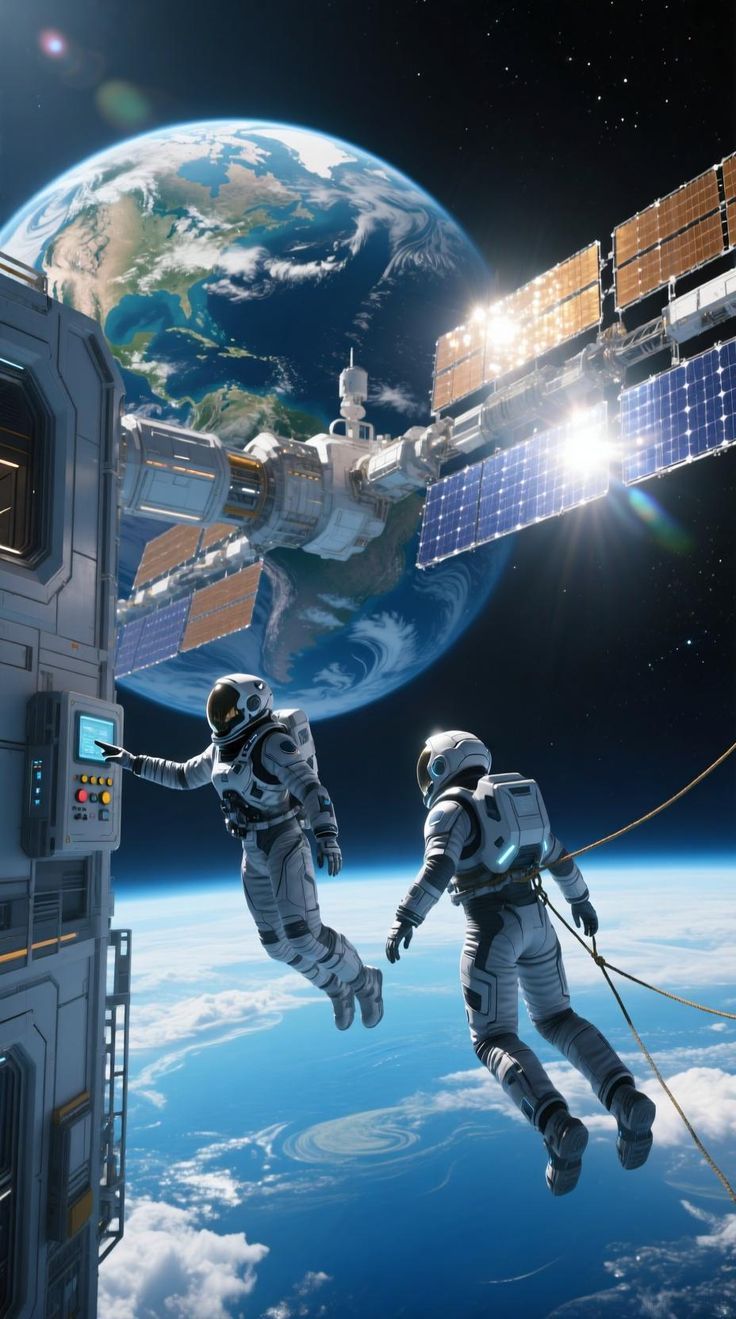
Human spaceflight has allowed astronauts to study microgravity, perform experiments, and test technologies for long-duration missions. Space stations like the ISS provide a platform for international collaboration and ongoing research in orbit.
The Search for Extraterrestrial Life
Exoplanets and Habitable Zones
Scientists search for planets beyond our solar system that may support life. Using advanced telescopes, they identify exoplanets in habitable zones where liquid water and suitable temperatures may exist.
SETI and Beyond
The Search for Extraterrestrial Intelligence (SETI) focuses on detecting signals from intelligent life in the universe. Combined with planetary research, these efforts aim to answer one of humanity’s oldest questions: Are we alone in the cosmos?
Space Phenomena: Wonders of the Universe
Supernovae and Stellar Life Cycles
Stars undergo life cycles, from formation in nebulae to eventual death as white dwarfs, neutron stars, or black holes. Supernovae, the explosive deaths of massive stars, distribute elements essential for life and trigger new star formation.
Galaxies and Cosmic Structures
Galaxies, composed of billions of stars, form clusters and superclusters that define the large-scale structure of the universe. Studying these structures reveals insights about gravity, dark matter, and the evolution of the cosmos.
Technological Innovations Driven by Space Science
Satellites and Communication
Space science has led to technological advances that impact daily life. Satellite technology supports global communication, weather forecasting, GPS navigation, and Earth observation.
Materials and Engineering
Developing spacecraft and instruments has pushed materials science, robotics, and artificial intelligence forward. These innovations often find applications in medicine, transportation, and industry on Earth.
The Future of Space Science
Exploring Mars and Beyond
Future missions aim to explore Mars in greater detail, search for life, and eventually support human colonization. Plans for missions to asteroids, moons, and even interstellar space continue to expand humanity’s reach.
Understanding the Universe More Deeply
New telescopes, such as space-based observatories, will provide unprecedented views of the early universe, black holes, and distant galaxies. Continued research will help answer fundamental questions about the origin, structure, and fate of the cosmos.
The Significance of Space Science
Space science allows humans to explore beyond our planet, understand universal laws, and develop technologies that improve life on Earth. By studying the universe, we learn about our place in the cosmos, the forces that shape it, and the possibilities that lie ahead. Exploring space inspires curiosity, innovation, and collaboration, demonstrating the limitless potential of human knowledge and discovery.