
What Physics Is
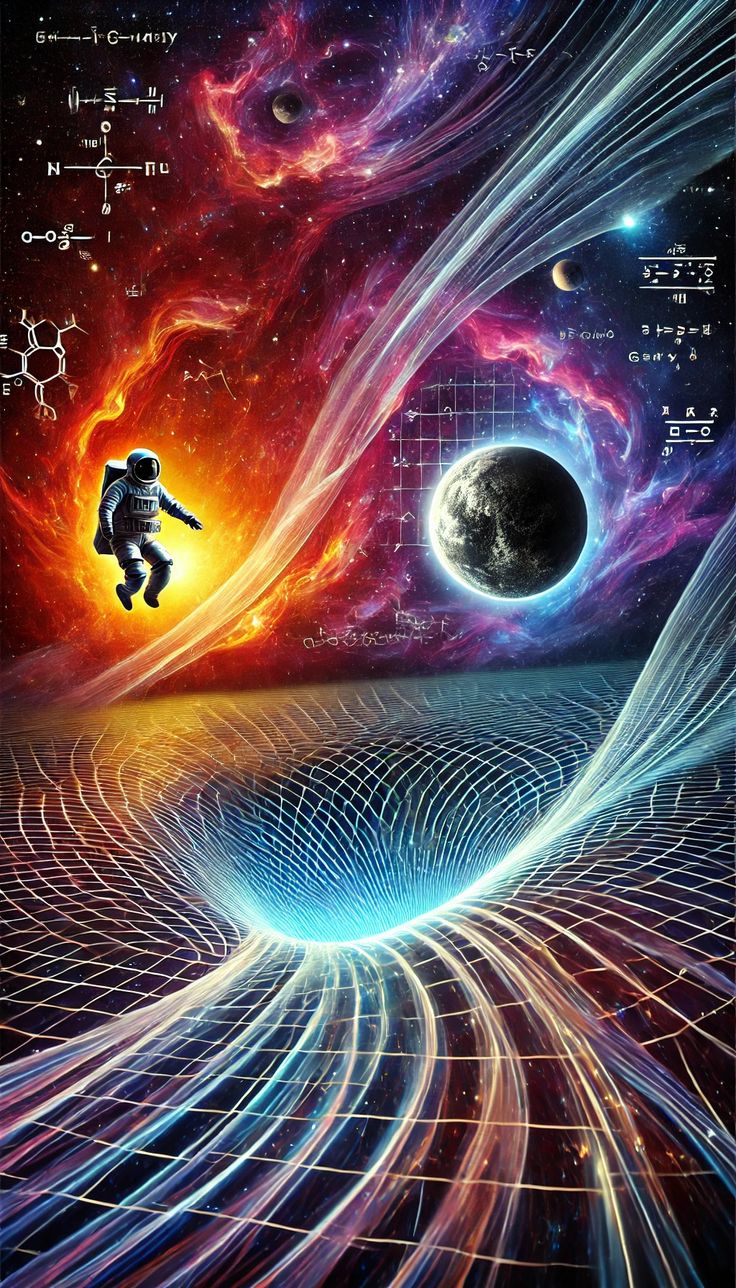
Physics is the branch of science that studies matter, energy, and the fundamental forces of nature. It seeks to understand how the universe works, from the smallest particles to the largest galaxies. Physics explains why objects move, how energy is transferred, and the principles behind natural phenomena such as gravity, light, and electricity. By studying physics, we gain a framework for understanding the world around us and developing technologies that improve our daily lives.
Motion and Forces
Newton’s Laws of Motion
One of the foundational concepts in physics is motion. Sir Isaac Newton formulated three laws of motion that describe how objects move. The first law, or the law of inertia, states that an object remains at rest or in uniform motion unless acted upon by an external force. The second law explains that force equals mass times acceleration, showing how forces influence motion. The third law states that for every action, there is an equal and opposite reaction, explaining interactions between objects.
Gravity
Gravity is a force that attracts objects toward each other. It gives weight to objects and governs the motion of planets, moons, and stars. Isaac Newton described gravity mathematically, showing how it affects the motion of celestial bodies, while Albert Einstein later explained it as the curvature of space-time in his theory of general relativity.
Energy and Work
Different Forms of Energy
Energy is the ability to do work. Physics identifies various forms of energy, including kinetic energy (energy of motion), potential energy (stored energy), thermal energy, chemical energy, and electrical energy. Energy can transform from one form to another, but it is never created or destroyed, according to the law of conservation of energy.
Work and Power
Work is done when a force moves an object over a distance. Power measures how quickly work is done. Understanding energy and work is essential in mechanics, engineering, and everyday life, from powering machines to understanding natural processes.
Waves and Sound
Wave Properties
Waves are disturbances that transfer energy from one point to another without transferring matter. They can be mechanical, such as sound waves, or electromagnetic, like light waves. Key properties include wavelength, frequency, amplitude, and speed, which determine how waves behave and interact with their environment.
Sound Waves
Sound is a mechanical wave that travels through air, liquids, or solids. Its speed depends on the medium, and its frequency determines the pitch we hear. Understanding sound waves is essential in acoustics, music, communication, and technology.
Light and Optics
The Nature of Light
Light is an electromagnetic wave that enables vision and transmits energy across space. It exhibits properties of both waves and particles, a duality explained by quantum physics. Light can be reflected, refracted, absorbed, or transmitted depending on the medium it passes through.
Optical Phenomena
Physics explains phenomena such as rainbows, mirages, lenses, and fiber optics. The study of optics allows for the development of cameras, glasses, microscopes, and lasers, which are crucial in science, medicine, and technology.
Electricity and Magnetism
Basic Concepts
Electricity involves the movement of electrons in conductors, while magnetism is a force caused by moving charges or magnetic materials. Together, they form the basis of electromagnetism, a fundamental force in physics.
Applications
Understanding electricity and magnetism allows us to generate power, build motors, transmit information, and create electronic devices. Electromagnetic waves, such as radio, microwaves, and X-rays, are essential for communication, medicine, and technology.
Thermodynamics
Heat and Temperature
Thermodynamics studies the relationship between heat, energy, and work. Temperature measures the average kinetic energy of particles in a substance, while heat represents the energy transferred between objects due to a temperature difference.
Thermodynamic Laws
The laws of thermodynamics govern energy transfer and transformation. They explain why engines work, why refrigerators keep food cold, and why perpetual motion machines are impossible. These principles are fundamental in physics, chemistry, and engineering.
Atomic and Nuclear Physics
Structure of Matter
Atoms are the building blocks of matter, consisting of a nucleus of protons and neutrons surrounded by electrons. Understanding atomic structure explains chemical reactions, material properties, and the behavior of elements.
Nuclear Energy
Nuclear physics studies interactions within the nucleus, including fission and fusion. Fission splits atoms to release energy in reactors, while fusion combines atoms, powering the sun and future energy research. These principles are key to energy production and medical applications.
Modern Physics
Relativity
Albert Einstein’s theory of relativity changed our understanding of space, time, and gravity. Special relativity showed that time and space are relative to the observer, while general relativity described gravity as the curvature of space-time. These concepts explain phenomena such as black holes and cosmic expansion.
Quantum Mechanics
Quantum mechanics explores the behavior of particles at atomic and subatomic scales. It introduces concepts like wave-particle duality, uncertainty, and quantization of energy. Quantum physics underlies modern technology, including semiconductors, lasers, and quantum computing.
The Significance of Physics
Physics provides a framework for understanding the universe and the laws governing it. From classical mechanics to modern quantum theory, physics explains natural phenomena, drives technological innovation, and deepens our knowledge of the world. By studying the basics of physics, we gain insights that influence science, engineering, medicine, and everyday life, highlighting the critical role physics plays in shaping human civilization.