
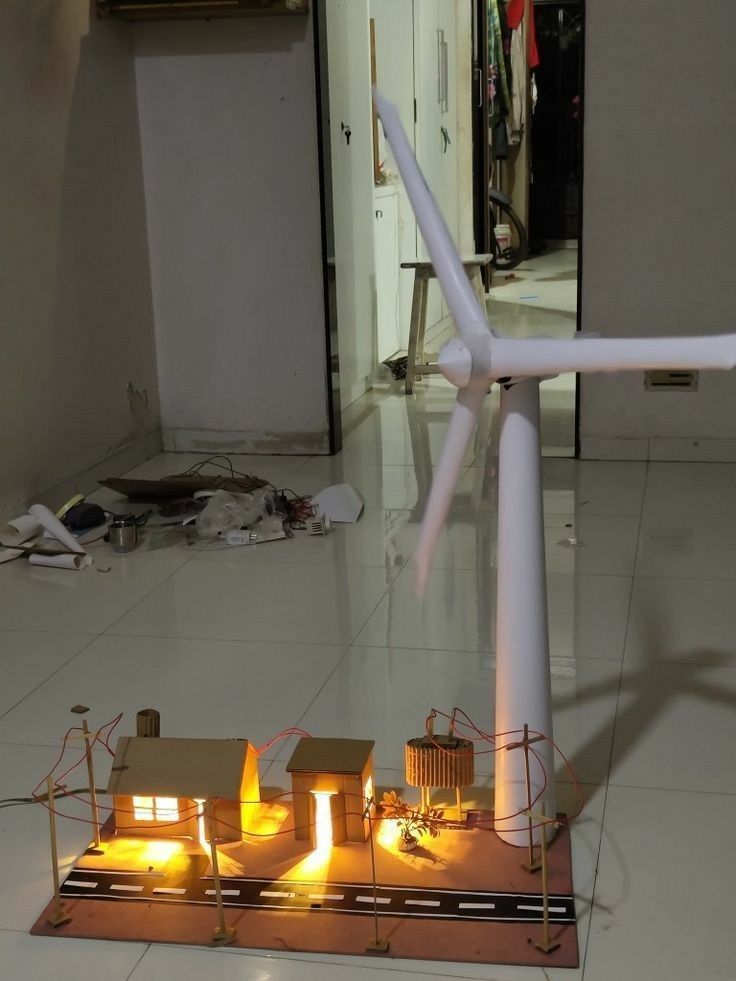
Science experiments play a vital role in helping students understand how the world works. Instead of relying only on textbooks, experiments allow learners to observe, test, and verify scientific ideas through practical activities. Simple science experiments are especially useful for school students because they use everyday materials and demonstrate concepts clearly. These activities encourage curiosity, creativity, and logical thinking while making learning enjoyable and meaningful.
Hands-on experiments help students develop problem-solving skills and build confidence in scientific learning. By performing experiments themselves, students learn how to ask questions, make predictions, record observations, and analyze results. These skills are essential not only in science but also in daily life and future careers.
Why Science Experiments Are Important for Students
Science experiments transform abstract concepts into real-life experiences. When students see a reaction happen or observe a physical change, learning becomes more effective and long-lasting. Experiments help bridge the gap between theory and practice, allowing students to understand complex ideas in a simple way.
Experiments also encourage independent thinking. Students learn that science is not just about memorizing facts but about exploring, questioning, and discovering new information. This approach develops a scientific mindset that values evidence, accuracy, and curiosity.
Physics Experiments for Better Understanding
Balloon Rocket Experiment
Concept: Action and reaction forces
Materials: Balloon, string, straw, tape
Procedure: Pass a string through a straw and tie both ends of the string across a room. Inflate the balloon without tying it and tape it to the straw. Release the balloon and observe its movement along the string.
Observation: The balloon moves forward rapidly as air escapes backward.
Explanation: This experiment demonstrates Newton’s Third Law of Motion, which states that every action has an equal and opposite reaction. The air pushed out of the balloon creates a force that moves the balloon forward.
This experiment helps students understand how rockets and jet engines work. It also introduces the concept of thrust and motion in a simple and visual way.
Gravity Drop Test
Concept: Gravity and acceleration
Materials: Two objects of different weights
Procedure: Drop both objects from the same height at the same time.
Observation: Both objects hit the ground simultaneously.
Explanation: Gravity pulls objects toward the Earth at the same rate regardless of their weight, ignoring air resistance.
This experiment helps students correct common misconceptions about gravity and mass. It teaches that gravity affects all objects equally under similar conditions.
Chemistry Experiments Using Household Items
Baking Soda and Vinegar Reaction
Concept: Chemical reactions and gas formation
Materials: Baking soda, vinegar, bottle, balloon
Procedure: Pour vinegar into a bottle. Place baking soda inside a balloon. Attach the balloon to the bottle opening and allow the powder to fall into the vinegar.
Observation: The balloon inflates as bubbles form.
Explanation: When baking soda reacts with vinegar, carbon dioxide gas is produced, which inflates the balloon.
This experiment demonstrates chemical reactions in a safe and exciting way. Students learn how substances interact to form new products.
Invisible Ink Experiment
Concept: Chemical changes
Materials: Lemon juice, cotton swab, paper
Procedure: Write a message using lemon juice and let it dry. Gently heat the paper to reveal the message.
Observation: The hidden message appears when heated.
Explanation: Heat causes a chemical change in the lemon juice, making it visible.
This activity introduces oxidation and chemical reactions caused by heat while sparking creativity and interest.
Biology Experiments for Life Science Learning
Seed Germination Test
Concept: Plant growth
Materials: Seeds, soil, water, container
Procedure: Plant seeds in soil and water them daily. Observe growth over several days.
Observation: Seeds sprout and develop roots and leaves.
Explanation: This experiment shows how plants grow under proper conditions.
Students learn about plant life cycles, nutrition, and environmental needs. It also teaches patience and responsibility.
Breathing Rate Investigation
Concept: Human respiratory system
Materials: Stopwatch
Procedure: Measure breathing rate before and after physical activity.
Observation: Breathing rate increases after exercise.
Explanation: The body needs more oxygen during physical activity, causing faster breathing.
This experiment helps students understand how the human body responds to physical demands.
Earth and Environmental Science Experiments
Water Filtration Model
Concept: Environmental science and water purification
Materials: Sand, gravel, charcoal, plastic bottle
Procedure: Layer materials in a bottle and pour dirty water through it.
Observation: Water becomes clearer after filtration.
Explanation: Natural materials can remove impurities from water.
This experiment teaches students about clean water importance and environmental protection.
Soil Erosion Demonstration
Concept: Erosion
Materials: Soil, water, tray
Procedure: Pour water over soil and observe movement.
Observation: Soil washes away with water flow.
Explanation: Shows how erosion affects land and agriculture.
Scientific Skills Developed Through Experiments
Science experiments help students develop observation skills, data collection abilities, and logical reasoning. They learn how to follow procedures, record results, and draw conclusions. These skills are essential for academic success and real-world problem-solving.
Experiments also encourage teamwork and communication when performed in groups. Students learn to share ideas, discuss outcomes, and respect different viewpoints.
Safety Rules for Student Experiments
Safety is essential during science experiments. Students should follow instructions carefully, avoid tasting substances, and use protective equipment when necessary. Adult supervision ensures that experiments are conducted responsibly and safely.
Learning safety rules early builds discipline and prepares students for advanced scientific work in the future.
Real-Life Importance of Science Experiments
Science experiments connect classroom learning to real-life applications. Concepts learned through experiments explain everyday phenomena such as cooking, weather changes, health, and technology. Understanding science helps students make informed decisions and appreciate the world around them.
Early exposure to experiments can inspire future scientists, engineers, doctors, and researchers. It helps students realize that science is not difficult but exciting and relevant.